Affiliate Disclosure: This article contains affiliate links. Art Imitating Life may earn a commission if you make a purchase through qualifying links, at no additional cost to you.
A character can enter a room without saying a word and still tell an audience exactly how they want to be perceived. Sometimes that impression comes from a carefully tailored suit, a particular hairstyle, or the way they carry themselves. Other times, it comes from something much smaller: a pair of glasses.
In filmmaking, costume and appearance are part of the visual language through which audiences learn about characters. Before a story reveals someone's motivations, history, or personality, the camera has already given viewers clues. Clothing, accessories, color, silhouette, and personal styling can establish social position, suggest an attitude, or create a recognizable identity.
Eyewear is especially interesting because it occupies such a visible position. It frames the face, changes its proportions, and can become one of the most recognizable features of a character's appearance. A pair of sunglasses can create distance between a character and the world around them. Prescription glasses can become an identifying feature, a practical necessity, or a visual expression of personality.
The most memorable examples demonstrate that eyewear is rarely just an accessory in film. It can become part of the character's identity, the atmosphere of a scene, and sometimes the cultural legacy of the production itself.
The Visual Language of Character Design
Film audiences do not experience character design through dialogue alone. They interpret visual information constantly, often without consciously recognizing it. A costume can establish a character's profession, financial circumstances, cultural environment, or relationship with the world. Accessories help refine that impression.
This is one reason costume designers pay attention to seemingly minor details. The right accessory can make a character feel more believable, distinguish them from other characters, or reinforce a visual idea that runs throughout the story.
Eyewear offers a particularly flexible design choice. The shape of a frame, the size of a lens, the color of the material, and the way the glasses sit on the face can all influence how a character is perceived. A delicate frame can create a different impression from a heavy, geometric one. Dark lenses can obscure the eyes, while clear lenses allow facial expressions to remain visible.
These choices are not governed by universal rules. A pair of glasses does not automatically make someone appear intelligent, intimidating, fashionable, or reserved. Meaning comes from the relationship between the accessory, the character, the performance, and the world of the film.
The strongest costume choices work because they feel connected to the person wearing them. Eyewear becomes meaningful when it contributes to a larger visual identity rather than appearing as an arbitrary addition.
When Eyewear Becomes a Character's Signature
Some films demonstrate how an accessory can become inseparable from a character's public image. The audience may remember the silhouette before recalling the details of the costume or even the circumstances of the scene.
Consider Breakfast at Tiffany's (1961). Holly Golightly's appearance became one of the most recognizable visual identities in cinema, with her oversized dark sunglasses contributing to the polished, glamorous image associated with the character. The styling helped establish the world Holly wanted to inhabit: sophisticated, aspirational, and carefully composed. The glasses became part of a look that extended beyond the film, influencing fashion imagery and popular culture for decades.
This is an example of eyewear functioning as a signature. It does not need to explain every aspect of a character's personality. Instead, it becomes a visual shorthand that audiences associate with the character and the film.
A different kind of signature appears in Harry Potter. Harry's round spectacles are among the most recognizable elements of his appearance. They distinguish him visually and become part of the character's identity across the film series. Unlike sunglasses chosen to make a fashion statement, Harry's glasses are an everyday feature of his appearance. Their consistency helps maintain recognition as the character grows and the story expands.
These examples illustrate two distinct functions of eyewear in character design: it can establish an instantly recognizable style, or it can become a defining feature that follows a character throughout a story.
WANT MORE FILM AND ENTERTAINMENT BREAKDOWNS? READ MY LATEST ANALYSIS HERE
The Power of Concealment: What Sunglasses Keep From the Audience
Sunglasses introduce another storytelling possibility. Unlike clear prescription lenses, dark lenses can hide the eyes, limiting one of the most important sources of emotional information available to an audience.
In Men in Black (1997), the black sunglasses worn by the agents are central to the film's visual identity. They reinforce the organization's uniformity, secrecy, and authority. The agents operate in a world where extraordinary events must remain hidden from ordinary people. Their dark glasses contribute to that sense of separation, making them look like members of an organization that exists just outside public awareness.
The sunglasses also connect to one of the film's most memorable devices: the neuralyzer, which erases witnesses' memories of alien encounters. The agents' appearance becomes part of the larger visual language of secrecy and controlled information.
In The Matrix (1999), sunglasses serve a different purpose. The film's distinctive eyewear contributes to its futuristic, stylized visual world. Characters such as Morpheus and Neo wear dark, reflective lenses that reinforce the story's atmosphere of uncertainty, control, and resistance. The glasses help create a visual distinction between the characters and the ordinary world they are questioning.
In both films, sunglasses do more than complete an outfit. They affect how much of the character's emotional state the audience can see. By concealing the eyes, filmmakers can create mystery, distance, and visual tension.
This is particularly useful in cinema because the face is one of the most expressive parts of a performance. When the eyes are hidden, the audience must pay closer attention to posture, movement, dialogue, and the surrounding environment.
A Silhouette That Communicates Profession and Attitude
Eyewear can also help establish a character's relationship with a particular profession, subculture, or lifestyle.
The aviator sunglasses in Top Gun (1986) are an especially recognizable example. The film's visual identity is closely connected to military aviation, and the aviator silhouette fits naturally within that environment. Worn by the pilots, the glasses reinforce the characters' connection to the world of flight while contributing to the confident, distinctly styled image that became associated with the film.
The importance of this example is not simply that aviators look fashionable. Their design makes sense within the film's setting and contributes to a larger aesthetic built around aviation, competition, confidence, and military identity.
This is a useful distinction in costume design. An accessory is more convincing when it belongs to the character's world. It should feel as though the character would plausibly choose or wear it, rather than appearing solely because the production wants a visually attractive image.
That principle extends beyond eyewear. A costume designer may select a watch, bag, pair of shoes, or piece of jewelry because it reflects the character's circumstances. Each detail helps build a more complete picture of the person audiences are watching.
Eyewear, Authority, and the Performance of Power
Accessories can also influence how a character occupies a scene. The way someone dresses may suggest authority, professionalism, confidence, or a desire to control how others perceive them.
In The Devil Wears Prada (2006), fashion is inseparable from the film's examination of status and professional identity. The characters move through an environment where appearance is closely connected to influence, taste, and access. Eyewear can contribute to that visual hierarchy, just as clothing and other accessories help distinguish the people who understand and command the fashion world from those still learning its expectations.
The film is particularly useful for considering how personal presentation operates as a form of social communication. What someone wears can affect how they are received before they have an opportunity to demonstrate their ability.
That does not mean a particular frame automatically communicates authority. Rather, the overall styling of a character can reinforce the role they occupy within a story. Eyewear is one of the details that helps create that impression.
From Costume Design to Personal Style
The visual principles used in filmmaking do not stop at the screen. People also use clothing and accessories to communicate aspects of their identity in everyday life.
The difference is that an audience is not interpreting a character from the outside. Individuals make their own choices about how they want to look and feel, often drawing inspiration from films, television, fashion photography, music, and popular culture.
A frame can become a subtle part of that expression. Some people prefer understated shapes that fit comfortably into their everyday wardrobe. Others gravitate toward larger silhouettes, distinctive angles, or colors that make eyewear a more prominent feature of their appearance.
The same design considerations that make eyewear useful in character styling can help people think about their own choices.
Shape and proportion influence how a frame sits in relation to the face. A frame that looks striking in a fashion editorial may not necessarily be the most comfortable or flattering option for every person.
Color and material affect the overall impression. Neutral colors can be easier to coordinate across different outfits, while more distinctive finishes can become a deliberate part of someone's personal style.
Purpose and practicality matter just as much as appearance. Prescription eyewear has functional requirements, while sunglasses offer different considerations involving lens protection, fit, and intended use. A frame should work for the person wearing it, not simply resemble something seen on screen.
Film can provide inspiration, but personal style is ultimately about interpretation rather than imitation.
Finding Your Own Frame: Exploring DIMA Eyewear
For readers interested in exploring eyewear beyond the screen, DIMA offers an opportunity to approach frames as part of personal style.
Rather than looking for a pair of glasses that reproduces a particular movie character's appearance, it can be more useful to consider what makes a frame appealing in the first place. Is it the shape? The proportions? The color? Does it complement an existing wardrobe, or does it offer something more expressive?
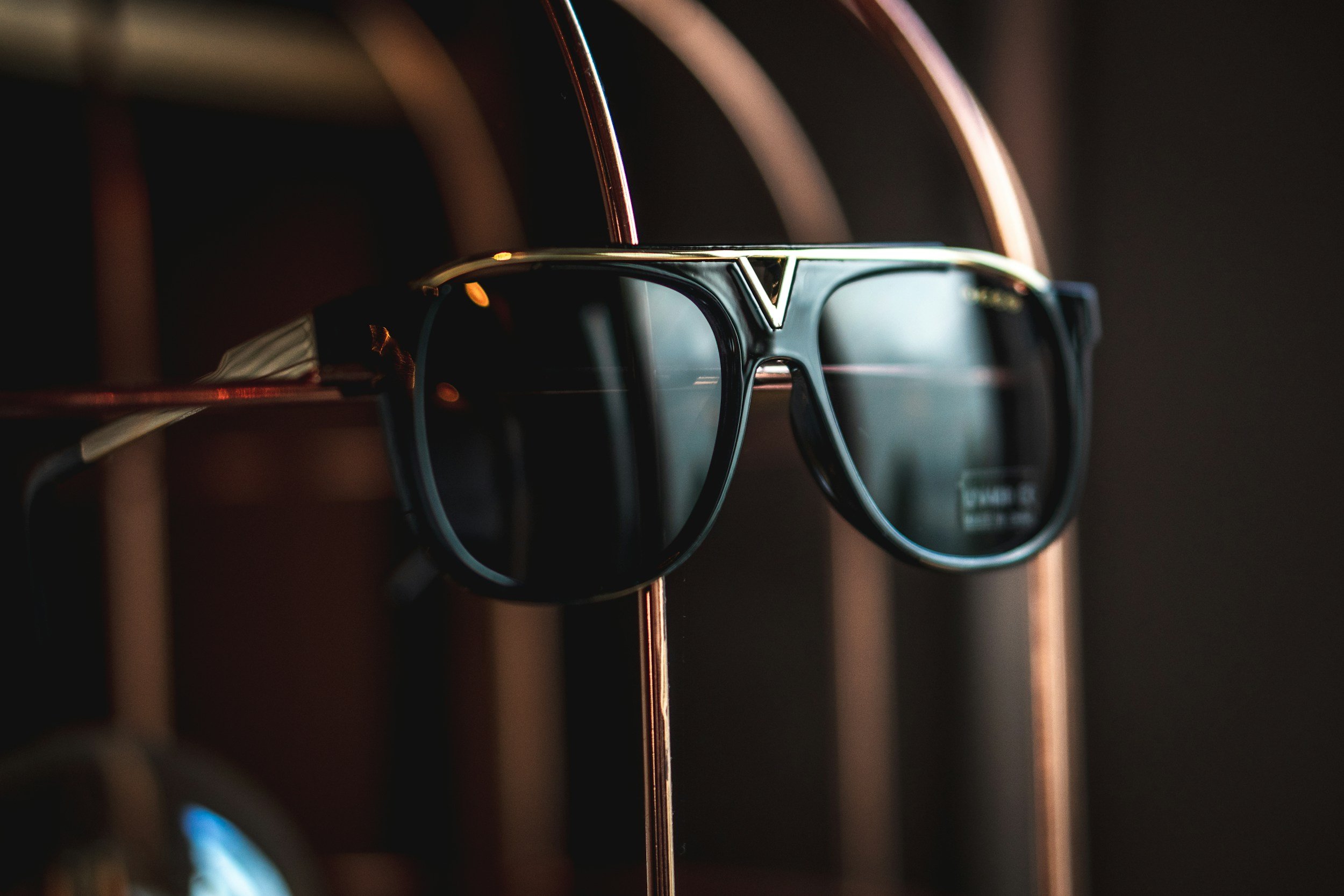
When exploring a collection, consider the different silhouettes available. Aviator-inspired frames can offer a recognizable, structured look. Oversized designs can make a stronger visual statement, while cat-eye shapes introduce a more distinctive outline. Classic rectangular and round frames offer other approaches to everyday styling.
DIMA's eyewear collection provides a starting point for exploring different looks and finding a frame that reflects your own preferences.
Explore DIMA's Winter Clearance
For readers considering a new pair of sunglasses, DIMA Eyewear is currently offering its 2026 Winter Clearance, with discounts of up to 90% off selected styles and prices starting at $26. New customers can also receive an additional 20% off their first order with code WELCOME20. Orders over $65 qualify for free shipping.
The promotion runs from November 23 through December 31, 2026. Offers apply to eligible products, so check the brand's website for current pricing, availability, and promotional terms.
Shop the DIMA Winter Clearance
When choosing eyewear, however, appearance should not be the only consideration. Pay attention to frame measurements, fit, lens options, prescription requirements, and product specifications. For sunglasses, check the stated UV protection rather than assuming that darker lenses provide greater protection. A frame should complement your style while meeting your practical needs.
The goal is not to dress like a character. It is to recognize how visual details contribute to identity and use that understanding to make more intentional choices.

Continue Exploring
Explore how film, fashion, and visual culture influence the way stories are told and experienced.
Discover more film analysis, cultural commentary, and entertainment industry perspectives on Art Imitating Life. Subscribe to the AIL newsletter for fresh perspectives on the stories and trends shaping the industry.
The Lasting Image
Some film images remain recognizable long after audiences have forgotten individual scenes. A silhouette, a costume, a hairstyle, or a particular accessory can become part of the cultural memory surrounding a production.
Eyewear has a unique place in that process because it sits at the intersection of function and expression. It can establish a character's place in a story, reinforce a fictional world's atmosphere, conceal emotion, or become a signature audiences immediately recognize.
From Holly Golightly's glamorous sunglasses to the agents of Men in Black and the aviators of Top Gun, film history offers examples of how a relatively small design choice can contribute to a much larger visual identity.
The lesson for filmmakers is that character design is built through details. The lesson for audiences is that those details are often doing more storytelling than we realize.
And outside the cinema, the same principle applies: what we choose to wear can become part of the image we present to the world. Sometimes, the smallest detail changes the entire frame.
Affiliate Disclosure
This article contains affiliate links to DIMA Eyewear. If you click one of these links and make a qualifying purchase, Art Imitating Life may receive a commission at no additional cost to you. Affiliate relationships do not determine our editorial opinions or guarantee product recommendations. Product information and availability may change, so readers should consult the brand's website for current details.
DISCLAIMER FOR ART IMITATING LIFE
While we strive to provide accurate and helpful content on this site, Art Imitating Life makes no warranties or guarantees regarding the accuracy, completeness, or reliability of any information, advice, or opinions shared here. Use of the content on this website is at your own risk, and to the fullest extent permitted by law, Art Imitating Life is not liable for any losses, damages, or other consequences resulting from its use. By accessing and using this website, you acknowledge and accept this disclaimer and agree to its terms.
Our website may contain links to external websites for your convenience. These external sites are not controlled, sponsored, or endorsed by Art Imitating Life. We do not assume any responsibility for the content, availability, or practices of these third-party sites and disclaim liability for any loss or damage arising from your use of them.
