Remembering an Icon: Dolly Parton’s Legacy
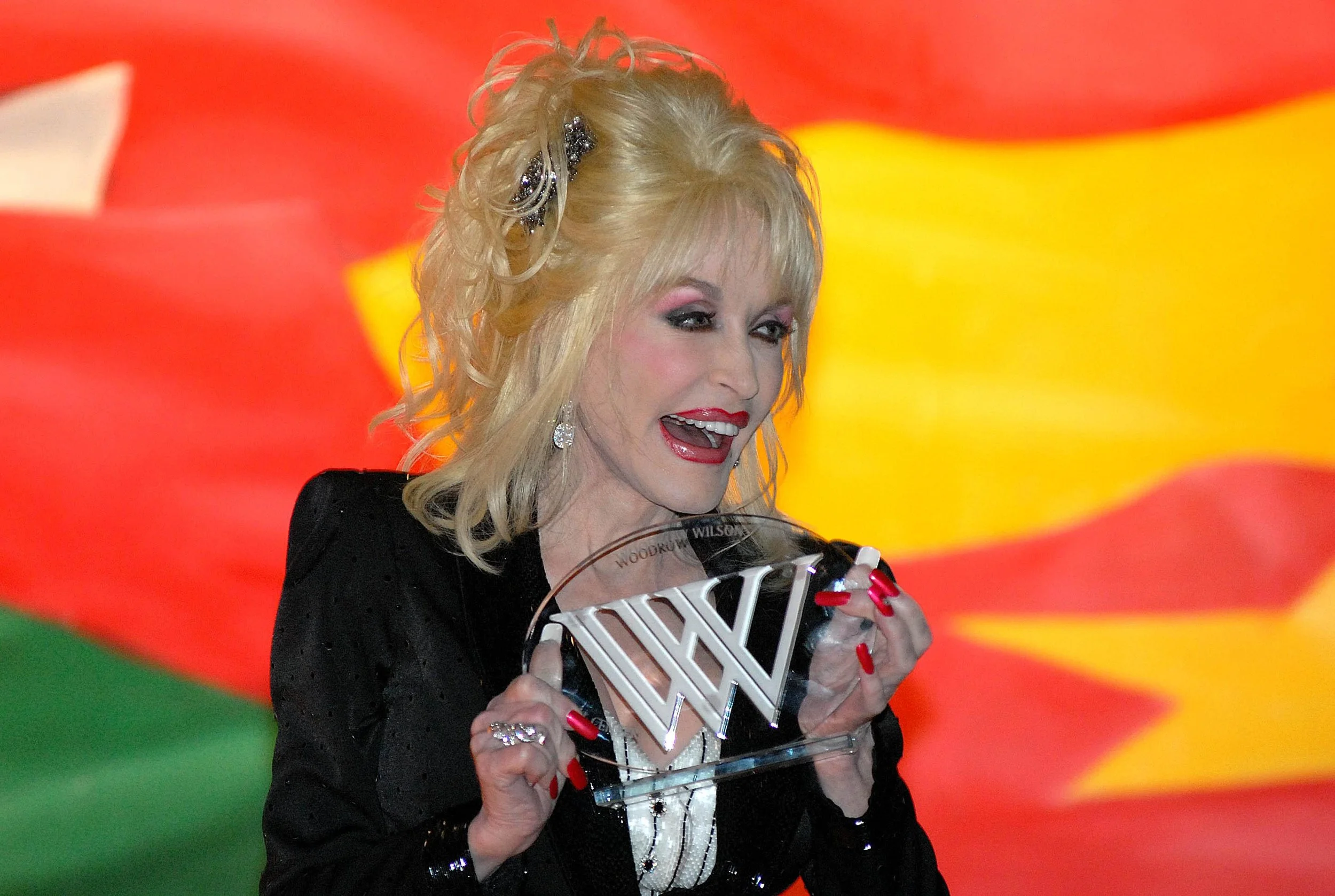
Image courtesy of Union20 via Wikimedia Commons. Public domain.
Some artists become famous within a particular era, while others become part of the cultural fabric itself. Dolly Parton was one of those rare artists whose career extended far beyond a single genre, medium, or generation.
Dolly Parton, the legendary singer, songwriter, actress, entrepreneur, and philanthropist, has died at 80 in Nashville, Tennessee, following a brief battle with cancer. She died surrounded by loved ones, bringing an end to a career that spanned nearly six decades and established her as one of the most recognizable figures in American entertainment.
For many people, Dolly Parton was difficult to place into a single category. She was a country music icon, but her influence reached far beyond country music. She was a songwriter whose compositions became standards, an actress who became part of some of the most recognizable films of her era, a businesswoman who built an entertainment empire, and a philanthropist whose work in childhood literacy became an important part of her legacy.
What makes her career particularly remarkable is how consistently her identity remained connected to the work. Whether she was writing a song, performing onstage, appearing in a film, building a business, or supporting a charitable cause, there was a recognizable Dolly Parton behind it.
Dolly Parton Built a Career on Her Own Terms
Born in 1946 in rural Tennessee, Parton grew up in a large family with limited financial means. Music became part of her life early, and she began performing as a child before entering the professional music industry. Her career gained momentum in the 1960s, including her work with Porter Wagoner, before she established herself as a successful solo performer.
From there, she developed into one of the most accomplished female country artists in history, writing thousands of songs and creating recordings that crossed genre and generational boundaries. Her catalog includes enduring songs such as "Jolene," "Coat of Many Colors," "9 to 5," and "I Will Always Love You."
The importance of Parton's songwriting cannot be separated from her legacy. She was not simply a performer interpreting material created by others; songwriting remained central to the way she understood herself as an artist. Her ability to transform personal experiences, relationships, hardship, ambition, and emotion into music became one of the defining characteristics of her career.
That commitment to the craft helped establish the foundation for everything that followed.
From Country Music to Hollywood
Dolly Parton's influence eventually extended into film, giving audiences another opportunity to experience her creative personality.
Her feature-film debut came with 9 to 5 in 1980, in which she starred alongside Jane Fonda and Lily Tomlin. The film became a major success, while Parton's title song became one of her most recognizable recordings. She later appeared in films including The Best Little Whorehouse in Texas, Rhinestone, and Steel Magnolias.
Her transition into acting demonstrated that she was never interested in limiting herself to a single creative discipline. She brought the same recognizable personality and creative instincts into film that had already defined her musical career.
From a filmmaking perspective, that makes her career particularly interesting. She did not treat music and acting as completely separate identities; instead, she allowed each discipline to become another avenue through which she could tell stories and connect with audiences.
Dolly Parton Understood the Power of Storytelling
Storytelling was at the center of much of Dolly Parton's work. Her songs told stories about family, love, poverty, ambition, heartbreak, resilience, and everyday life, while her films allowed her to communicate those themes through another medium.
Her public persona also became part of a larger story about where she came from and what she built. Parton openly discussed her upbringing and incorporated elements of her background, humor, appearance, and Southern identity into her public image without allowing those characteristics to diminish the seriousness of her accomplishments.
That combination of accessibility and ambition became one of the recognizable aspects of her career. She could make audiences laugh while simultaneously demonstrating a sophisticated understanding of entertainment, business, performance, and branding.
For artists, that balance is worth examining because a creative identity does not always exist separately from the work. Over time, the person behind the work can become part of the audience's relationship with it.
WANT MORE FILM AND ENTERTAINMENT BREAKDOWNS? READ MY LATEST ANALYSIS HERE
Dolly Parton Expanded Her Creative Reach
Music remained the foundation of Parton's career, but she expanded into acting, television, production, business, publishing, theme parks, and philanthropy. Dollywood became a major entertainment destination, while the Dollywood Foundation's Imagination Library became one of her most significant philanthropic efforts, providing books to children and making childhood literacy an important part of her public legacy.
Her ability to move into different areas without abandoning her identity is particularly relevant to creatives who sometimes worry that exploring another discipline means losing focus. Parton's career demonstrates that different creative outlets can exist within the same larger artistic vision.
Her work also shows the value of understanding how different aspects of an entertainment career can support one another. Music strengthened her film career, her public image supported her business ventures, and her celebrity provided a platform for philanthropy.
The Power of Knowing Who You Are
Dolly Parton's appearance, personality, humor, voice, songwriting, and business decisions became instantly recognizable. Rather than attempting to remove the characteristics that made her distinctive, she incorporated them into her public identity and turned them into part of her creative and commercial strength.
Her exaggerated aesthetic became recognizable, her Southern identity remained visible, and her humor became an important part of how audiences experienced her. At the same time, her songwriting and professional ambitions remained serious and highly disciplined.
That combination is particularly relevant in an entertainment industry where performers are frequently encouraged to adapt themselves to whatever the market currently values. Parton's career demonstrated that individuality can become an asset when an artist understands how to develop and communicate it effectively.
For creatives, there is value in learning how to recognize the qualities that make their work distinct rather than treating individuality as something that needs to be removed in order to become successful.
Dolly Parton Created Across Generations
One of the clearest indicators of Parton's cultural impact is the number of generations that became familiar with her work.
Older audiences knew her through her earliest country recordings, while other generations encountered her through film, television, business, philanthropy, collaborations, and the artists who later recorded her songs. Whitney Houston's version of "I Will Always Love You" introduced one of Parton's compositions to an entirely different global audience when Houston recorded it for The Bodyguard soundtrack in 1992.
That is an important characteristic of enduring art. A piece of work can outlive the circumstances in which it was originally created and continue finding new audiences who bring their own experiences to it.
Parton's catalog repeatedly demonstrated that quality storytelling does not require an audience to have lived through the original moment. A listener does not need to share the songwriter's exact circumstances to understand heartbreak, ambition, family, loss, love, or perseverance.
Dolly Parton's Legacy Goes Beyond Entertainment
It would be easy to remember Dolly Parton solely through her accomplishments as an entertainer, but that would leave out a significant part of her impact.
Her philanthropic work, particularly her commitment to childhood literacy through the Imagination Library, became one of the most recognizable extensions of her influence. She also contributed to medical research and supported numerous charitable and community initiatives throughout her career.
Celebrity provides visibility, but visibility alone does not determine legacy. What someone chooses to do with that visibility matters, and Parton used hers to entertain audiences, build businesses, support charitable causes, and contribute to efforts beyond the entertainment industry.
Her career therefore offers an example of how an entertainer can become something larger than an entertainer while maintaining a strong connection to the work that initially made her famous.

JOIN THE COMMUNITY
Stay ahead in entertainment and media trends. Subscribe for weekly insights on TV, streaming, social media, and storytelling—plus commentary and trending breakdowns delivered straight to your inbox.
What Filmmakers Can Learn From Dolly Parton
From a filmmaking perspective, there is a great deal to learn from Dolly Parton's career.
Her work demonstrates the importance of developing a recognizable creative voice, understanding an audience without allowing the audience to completely dictate the work, and remaining open to different forms of creative expression. Her transition between music and film showed that a creator can bring an established artistic identity into another medium while still respecting the demands of that new craft.
Her career also demonstrates the importance of consistency. Parton continued creating across decades while remaining recognizable to audiences who encountered her at very different points in her career.
That kind of longevity is difficult to achieve because it requires an artist to evolve without losing the characteristics that made people connect with the work in the first place.
Why Dolly Parton's Work Transcended Generations
Dolly Parton's career also connects closely to the idea of timeless art.
Her earliest work belongs to another era. Her films belong to different periods of Hollywood. Many of her most recognizable songs were written decades ago. Yet new audiences continue discovering them.
That is what makes timeless work so fascinating. It does not require an audience to have lived through the period in which it was created. Instead, it contains something emotionally recognizable enough to remain meaningful after the original cultural context has changed.
Parton's songs could speak about heartbreak, ambition, family, love, loss, humor, and perseverance without requiring listeners to share her exact circumstances. The details may belong to one era, but the emotions remain understandable.
That is one of the qualities that separates work that simply represents its time from work that has the potential to transcend it.
Remembering an Icon
Dolly Parton's death marks the end of an extraordinary chapter in American entertainment. She died following a brief battle with cancer, but the circumstances of her illness do not define the legacy she leaves behind.
The more meaningful way to remember Parton is through the body of work she created and the people she reached throughout her career. Her songs will continue to be recorded and performed, her films will continue to introduce her to new audiences, and the philanthropic institutions associated with her work will continue beyond her lifetime.
That is ultimately what makes an artist an icon. It is not simply the number of awards, records, films, business ventures, or honors attached to their name. It is what remains after the artist is no longer here to create something new.
Dolly Parton leaves behind a body of work that crossed generations, genres, and creative disciplines. She demonstrated that an artist could achieve extraordinary commercial success without abandoning individuality, evolve without losing a recognizable identity, and become a global celebrity without losing sight of her roots.
There will never be another Dolly Parton, but there will be countless artists who were influenced by her work, her career, and the example she established.
That may be one of the greatest forms of artistic legacy.
A Creative Legacy That Will Endure
Dolly Parton's career reminds us that great artists are not defined by a single medium, a single decade, or a single accomplishment. They are defined by their ability to keep creating, keep connecting with audiences, and produce work that remains meaningful beyond its original moment.
For nearly six decades, Parton accomplished that across music, film, business, and philanthropy. Her career demonstrated how powerful it can be when an artist develops a distinct voice and remains committed to it while allowing that voice to evolve.
Her work will continue to introduce her to new audiences, and the people who discover her decades from now will still have access to the songs, performances, films, stories, and ideas she left behind.
That is the enduring power of a creative legacy.
Dolly Parton understood that storytelling could cross generations, mediums, and cultural boundaries. Her career is a reminder that the most lasting work does not simply capture a moment in time; it gives future audiences a reason to keep returning to it.
And that is why Dolly Parton will remain an icon.
Continue the Conversation
Dolly Parton’s career is a reminder that great storytelling can travel far beyond its original moment, medium, or generation. If you enjoyed this remembrance and want to explore more conversations about filmmaking, storytelling, creativity, and the artists who shape the way we experience culture, subscribe to the Art Imitating Life newsletter and stay connected with the latest essays and industry perspectives.
And if Dolly Parton’s work has a special place in your own creative life, share your favorite song, film, performance, or memory of her in the comments. Sometimes the best way to remember an artist is to keep talking about the work they left behind.
DISCLAIMER FOR ART IMITATING LIFE
While we strive to provide accurate and helpful content on this site, Art Imitating Life makes no warranties or guarantees regarding the accuracy, completeness, or reliability of any information, advice, or opinions shared here. Use of the content on this website is at your own risk, and to the fullest extent permitted by law, Art Imitating Life is not liable for any losses, damages, or other consequences resulting from its use. By accessing and using this website, you acknowledge and accept this disclaimer and agree to its terms.
Our website may contain links to external websites for your convenience. These external sites are not controlled, sponsored, or endorsed by Art Imitating Life. We do not assume any responsibility for the content, availability, or practices of these third-party sites and disclaim liability for any loss or damage arising from your use of them.
