Comparative Study: Beyond Hollywood's Regional Film Industries
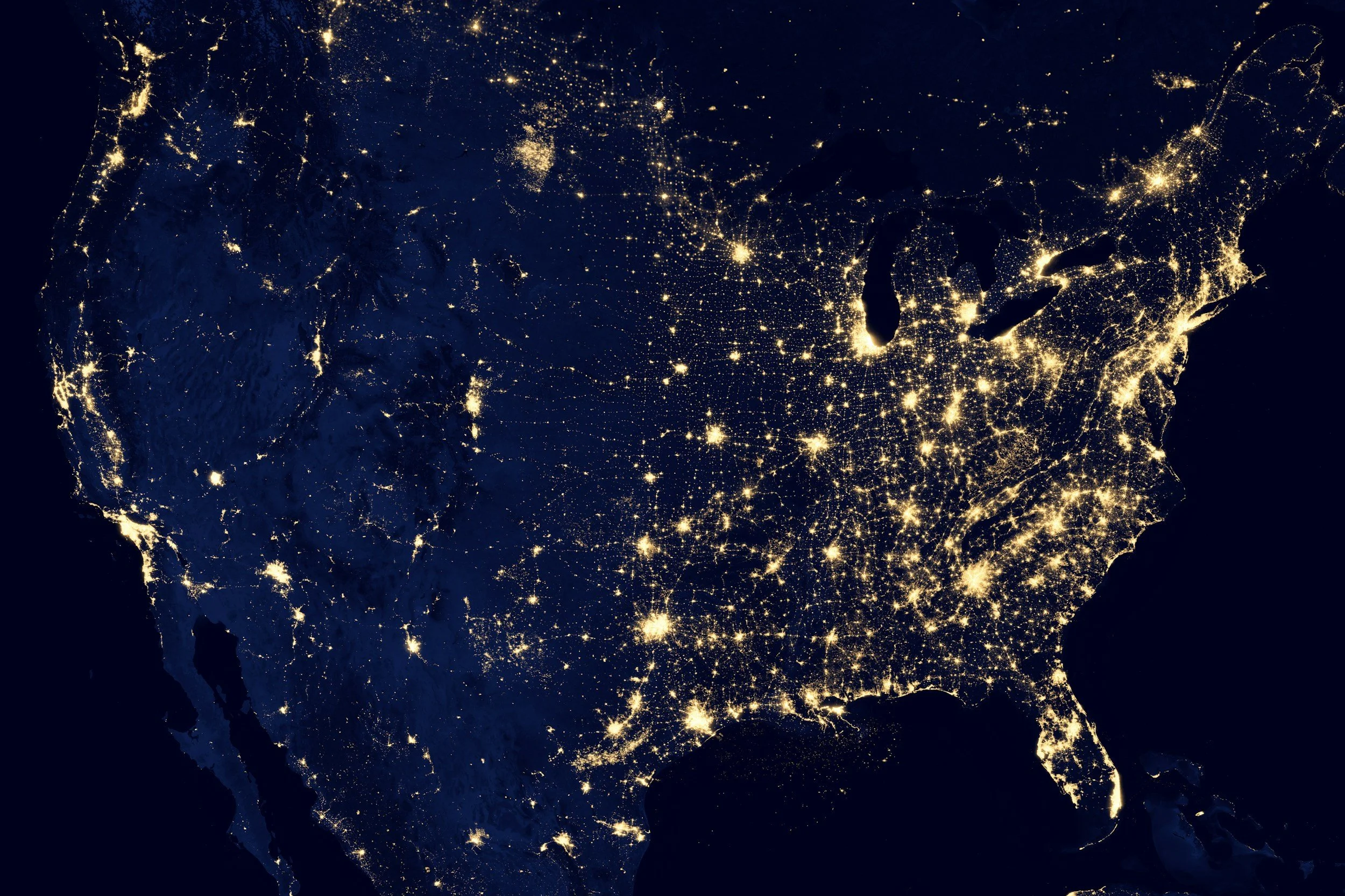
Hollywood has long been synonymous with the American film industry, but filmmaking has never belonged to one place alone. Across the country, states are developing production incentives, investing in facilities, and working to attract filmmakers who might once have looked almost exclusively to Los Angeles. The result is a more geographically diverse production landscape, one that raises important questions about where films are made, who benefits from that activity, and whether regional production can create lasting opportunities for local storytellers.
New Mexico, Illinois, Georgia, Texas, and Oklahoma illustrate different approaches to this shift. Their programs and production environments are not interchangeable, but together they reveal a central tension in the business of filmmaking: attracting a production is one achievement; building an industry that can sustain itself is another.
New Mexico: Building Beyond the Big Production Centers
New Mexico has become a notable example of how a state can use its locations, workforce, production infrastructure, and financial incentives to attract film and television projects. Its landscapes offer filmmakers a range of visual environments, while its established production network gives companies practical reasons to consider filming there.
The state offers a refundable film production tax credit with a base rate of 25% on qualified in-state expenditures. Additional incentives can raise the potential credit, subject to eligibility and program requirements. New Mexico has also sought to extend production spending beyond its largest urban centers through its rural Uplift Zone incentive. In fiscal year 2026, that program generated a reported $55.74 million in direct rural economic spending, according to the New Mexico Film Office.
Source: New Mexico Film Office.
The broader lesson is that a production's economic footprint can extend well beyond a soundstage. Local crew members, vendors, accommodations, transportation providers, and other businesses can benefit when projects spend money in the communities where they film. However, those benefits depend on the amount of qualifying local activity and the degree to which productions use and develop the existing workforce.
New Mexico's experience also shows why incentives work best as part of a larger strategy. A competitive credit can help attract a project, but a durable industry needs trained workers, reliable facilities, and a consistent pipeline of productions that allows people to build careers in the state.
Illinois: Expanding a Major Regional Production Hub
Illinois offers a different model, with Chicago serving as an established production center supported by urban locations, experienced crews, and an existing creative economy. Rather than building an industry from scratch, the state is strengthening a market that already has production activity and expanding the financial case for companies to work there.
In 2025, Illinois expanded its film production tax credit. For qualifying productions commencing on or after July 1, 2025, the program provides a 35% credit on eligible Illinois production spending and qualifying Illinois resident labor, with a 30% credit for certain eligible nonresident wages subject to program limits. The details depend on the type of expenditure, worker eligibility, and the applicable program rules.
Source: Illinois Department of Commerce and Economic Opportunity.
The significance of this expansion goes beyond a headline percentage. Production incentives influence where companies spend money, whom they hire, and which vendors they use. When the rules encourage local spending and employment, a greater share of a production's activity can remain in the state.
Yet Illinois also highlights a challenge for regional filmmaking: an established hub still has to compete for projects. Production decisions can shift as budgets, incentive policies, facilities, and industry demand change. Maintaining a strong position therefore requires more than a recognizable city backdrop. It requires a workforce and production ecosystem that can meet projects' needs reliably.
WANT MORE FILM AND ENTERTAINMENT BREAKDOWNS? READ MY LATEST ANALYSIS HERE
Georgia: What Happens When the Infrastructure Is Already There?
Georgia provides another useful comparison because its production ecosystem has developed around a combination of incentives, experienced crews, facilities, and a sustained effort to attract projects. Atlanta, in particular, has become closely associated with film and television production, while activity across the state supports a wider network of locations and businesses.
Georgia's film tax credit offers a 20% base transferable tax credit for qualifying production expenditures, with an additional 10% uplift for eligible projects that meet the state's promotional requirements. Productions must also satisfy expenditure thresholds and applicable certification and audit rules.
Sources: Georgia Department of Economic Development and Georgia Department of Revenue.
Georgia illustrates how incentives can become part of a broader production proposition. When filmmakers can access experienced crews, production services, facilities, and a well-developed local network, the state offers more than a financial calculation. It offers an environment where productions can operate.
That environment matters because infrastructure and experience can reinforce each other. More production activity can create opportunities for workers and vendors to gain experience; that expertise can, in turn, make the location more attractive to future productions. The challenge is ensuring that the benefits extend beyond temporary activity and support sustainable employment and local creative development.
Texas and Oklahoma: Building a Regional Film Industry
Texas and Oklahoma offer an especially interesting comparison because they demonstrate how neighboring states can pursue production growth through different programs and local creative ecosystems.
Texas has a statewide production incentive called the Texas Moving Image Industry Incentive Program. Unlike a traditional film tax credit, it provides cash grants to qualifying projects based on eligible Texas expenditures. Depending on project type, budget, and eligibility, film and television productions can qualify for grants of up to 31% of eligible in-state spending. The program also covers other forms of media production, including commercials, animation, visual effects, video games, and extended reality projects. Qualifying productions must meet requirements involving in-state spending, resident crew and cast, and the proportion of production completed in Texas.
Source: Texas Film Commission.
Texas also benefits from a broad range of locations and creative communities, including Austin, Dallas, and Houston. These cities have distinct identities and resources, making the state's production landscape more varied than a single-city model. The opportunity is to convert that range of resources into consistent work for local professionals and businesses, rather than relying solely on individual productions attracted by financial incentives.
Oklahoma offers another perspective on that goal. Under the Filmed in Oklahoma Act of 2021, the state provides a base incentive of 20% for eligible projects that film principal photography in Oklahoma, with additional requirements and provisions depending on the project. Oklahoma also operates a standalone post-production rebate program for qualifying projects that filmed their principal photography outside the state.
Source: Oklahoma Film + Music Office.
Within that statewide landscape, Oklahoma City is worth examining as a potential center for connecting filmmakers, production professionals, local businesses, and emerging storytellers. The city's opportunity is not simply to attract outside productions, but to help make film and media work more accessible to the people who live there. That means examining the availability of production services, opportunities to gain on-set experience, connections between local creatives, and the resources needed to develop projects from the ground up.
Texas and Oklahoma should not be treated as identical markets, nor should Oklahoma City be assumed to have the same production infrastructure as a larger, more established hub. Their value as a comparison lies in the different stages and conditions under which regional industries grow. Texas demonstrates the scale and breadth of a statewide incentive program; Oklahoma provides an opportunity to examine how a state and its cities can turn incentives and local resources into a stronger, more connected production community.
For Oklahoma City, the question is how statewide investment translates into opportunities at the local level. Are productions creating repeat work for Oklahoma-based crews? Can independent filmmakers access the equipment, facilities, collaborators, and funding they need? Are emerging writers, directors, editors, and producers able to build sustainable careers without having to relocate to a traditional entertainment center?
Those questions matter because the success of a regional film industry should not be measured only by how many outside productions arrive. It should also be measured by what remains after filming wraps: local expertise, stronger businesses, professional networks, and opportunities for homegrown stories to reach audiences.
Beyond Incentives: What Makes a Regional Film Industry Sustainable?
Across these states, incentives are an important part of the story, but they are not the entire story. A production may choose a location because of its financial advantages, scenery, or access to facilities. Whether that choice leads to lasting growth depends on what the location can support beyond the individual project.
A sustainable regional industry needs a trained workforce, dependable infrastructure, experienced production services, and a network of local businesses capable of meeting the demands of different projects. It also needs policies that are clear and predictable enough for companies to plan around, alongside opportunities for local professionals to advance rather than remain limited to short-term work.
There is another dimension that deserves equal attention: creative ownership. Regional filmmaking is not only about bringing productions into new locations. It is also about creating conditions in which people from those regions can develop and produce their own work. A place can host a major production without necessarily building a stronger pathway for local writers, directors, cinematographers, editors, and producers. The distinction is important because an industry becomes more deeply rooted when local talent can participate in both the production process and the storytelling itself.
This is where regional development becomes a question of culture as well as economics. The locations, communities, histories, and perspectives outside Hollywood can contribute something distinct to American filmmaking. Supporting that contribution means investing in the people who understand those places, not simply using them as backdrops.

Explore More of the Industry
Keep exploring the industry beyond the headlines. Discover more film-industry analysis, cultural commentary, and comparative perspectives on Art Imitating Life.
The Future of American Filmmaking May Be More Regional
Hollywood will remain an influential center of filmmaking, but it does not have to be the only place where a production career can begin or grow. New Mexico, Illinois, Georgia, Texas, and Oklahoma each show different ways that states can compete for production activity, support local infrastructure, and expand the geography of American screen production.
The next stage of regional filmmaking will depend on whether those efforts can create lasting value. Incentives can attract projects, facilities can make production possible, and experienced crews can keep work moving. The bigger test is whether those elements come together to support consistent employment, stronger local creative communities, and stories that might not otherwise be told.
For filmmakers considering where to build a career, and for communities hoping to develop their creative economies, the question is no longer simply whether production can happen outside Hollywood. It is whether those places can build the conditions for filmmaking to thrive on their own terms.
Where Will the Next Generation of Filmmaking Take Shape?
Hollywood remains influential, but the future of American filmmaking is also being shaped by regional production hubs and the communities supporting them.
Which region do you think has the greatest potential to grow its film industry, and what matters most: incentives, infrastructure, workforce development, or opportunities for local storytellers?
Join the conversation and explore more film-industry analysis, comparative studies, and cultural commentary on Art Imitating Life.
DISCLAIMER FOR ART IMITATING LIFE
While we strive to provide accurate and helpful content on this site, Art Imitating Life makes no warranties or guarantees regarding the accuracy, completeness, or reliability of any information, advice, or opinions shared here. Use of the content on this website is at your own risk, and to the fullest extent permitted by law, Art Imitating Life is not liable for any losses, damages, or other consequences resulting from its use. By accessing and using this website, you acknowledge and accept this disclaimer and agree to its terms.
Our website may contain links to external websites for your convenience. These external sites are not controlled, sponsored, or endorsed by Art Imitating Life. We do not assume any responsibility for the content, availability, or practices of these third-party sites and disclaim liability for any loss or damage arising from your use of them.
Editorial Disclaimer: The information presented in this article reflects the information available at the time of writing and publication. Film production incentives, eligibility requirements, industry conditions, and state policies are subject to change. Readers should consult the relevant official sources for the most current information. Art Imitating Life makes every effort to provide accurate and up-to-date information but does not guarantee that all details will remain current after publication.
