Recession-Era Entertainment: Why Stories Change During Economic Uncertainty
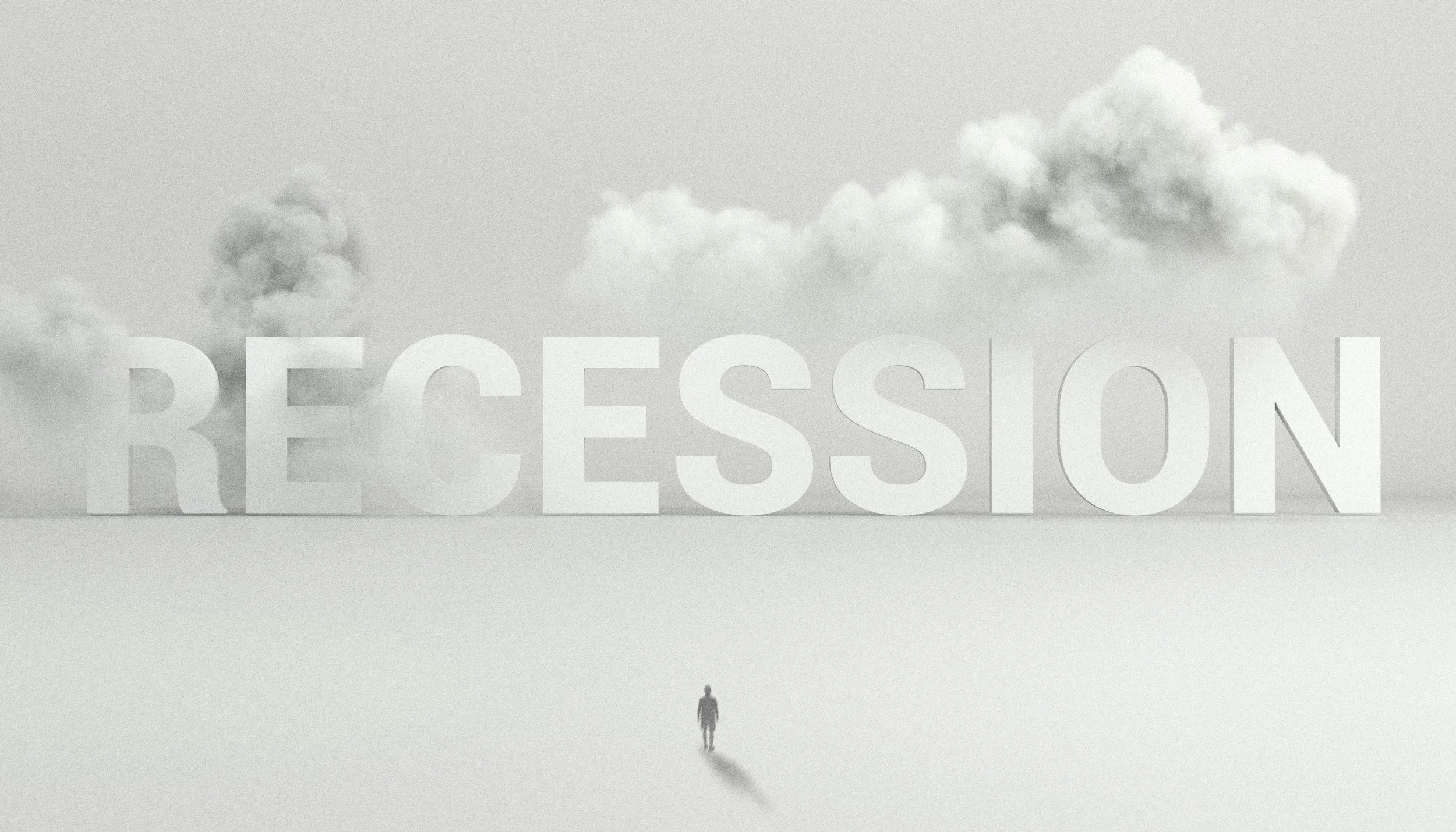
There is a pattern in entertainment that tends to repeat itself during periods of economic uncertainty: the stories change.
When financial pressure increases in the real world, the tone of film and television often shifts in response. Narratives become more grounded, emotionally restrained, and focused on survival, while overt escapism and spectacle begin to recede. This is commonly referred to as “recession-era entertainment,” a cultural pattern where storytelling reflects scarcity, instability, and reduced optimism.
This is not just an aesthetic coincidence. Research in media studies and cultural economics has long suggested that entertainment reflects broader social and economic conditions. During periods of recession or financial downturn, audiences tend to prefer narratives that mirror their lived experience, while industries adjust production toward lower-risk, lower-cost storytelling with stronger emotional realism.
What emerges is a feedback loop between cultural anxiety and narrative form.
How Economic Stress Shapes What Gets Made
Film and television do not exist separately from economic conditions; they are directly shaped by them.
During downturns, studios and streaming platforms tend to favor projects that are financially safer. This often means fewer large-scale productions and more contained stories with smaller casts, fewer locations, and reduced production complexity. But beyond cost, there is also a tonal shift. Stories increasingly center on constrained environments, financial pressure, and characters making difficult choices under limited circumstances.
Sociological research on media consumption has shown that audiences in uncertain economic periods gravitate toward narratives that reflect instability rather than ignore it. This is tied to a psychological concept known as “mood congruence,” where individuals prefer media that aligns with their emotional or environmental state.
In practice, this means that when real life feels uncertain, fiction that acknowledges that uncertainty often feels more engaging than fiction that avoids it.
The Rise of Grounded and Constraint-Based Storytelling
One of the clearest markers of recession-era entertainment is the shift toward grounded storytelling.
Instead of expansive, idealized worlds, narratives become more constrained and consequence-driven. Characters operate within systems that limit their options rather than expand them. Financial pressure, job insecurity, housing instability, and moral compromise become recurring narrative devices not because they are new, but because they resonate more strongly during periods of economic tension.
Even genre storytelling adjusts accordingly. Crime dramas lean toward procedural realism and systemic failure rather than stylized heroism. Comedies often become more awkward, subdued, or observational rather than exaggerated. Action narratives increasingly center on personal stakes rather than global scale.
This shift reflects what media theorists describe as “narrative compression under constraint,” a tendency for storytelling to reduce scale while increasing emotional specificity during periods of uncertainty.
WANT MORE FILM AND ENTERTAINMENT BREAKDOWNS? READ MY LATEST ANALYSIS HERE
Why Audiences Prefer Reflective Rather Than Escapist Stories
Audience behavior plays a significant role in shaping this trend.
Studies in media psychology suggest that people often use entertainment as a form of emotional regulation. During stressful or unstable periods, viewers may seek stories that validate their experience rather than distract from it. This is not necessarily a desire for darker content, but for emotionally aligned content.
There is also the role of cognitive processing. When real-world conditions feel unpredictable, narratives that mirror that unpredictability can feel easier to engage with because they reduce cognitive dissonance. Instead of escaping reality entirely, viewers engage with it in a structured and contained form.
At the same time, this does not eliminate escapism; it temporarily reshapes its demand.
The Cyclical Relationship Between Escapism and Realism
Entertainment history shows a consistent oscillation between escapism and realism.
During periods of stability or economic growth, storytelling tends to expand outward. Audiences see more spectacle, fantasy, and aspirational narratives. During periods of uncertainty, storytelling contracts inward, focusing on realism, constraint, and emotional grounding.
Media scholars often describe this as a cyclical cultural response rather than a linear progression. One mode does not replace the other permanently. Instead, they alternate depending on collective psychological and economic conditions.
What changes is not the existence of escapism, but its dominance.
Streaming Platforms and Accelerated Cultural Sensitivity
Modern streaming platforms have intensified this cycle.
Unlike traditional broadcast systems, streaming services operate on continuous data feedback. Engagement metrics, watch time, completion rates, and rewatch behavior all inform content development decisions. This allows platforms to detect tonal preferences with far greater speed than previous media systems.
Research into algorithmic media production shows that platforms tend to amplify content patterns that already perform well. If grounded, emotionally heavy narratives begin to outperform others, those signals are quickly reflected in commissioning and recommendation systems.
This creates a compressed cultural loop where audience behavior and content production influence each other in near real time.

JOIN THE COMMUNITY
Stay ahead in entertainment and media trends. Subscribe for weekly insights on TV, streaming, social media, and storytelling—plus commentary and trending breakdowns delivered straight to your inbox.
The Aesthetic Language of Economic Constraint
Recession-era entertainment is not only defined by theme, but also by visual and structural design.
Production design often shifts toward realism: fewer stylized environments, more naturalistic lighting, and restrained color grading. Sets tend to feel lived-in rather than constructed for spectacle. Dialogue becomes more conversational and less theatrical, reflecting a preference for authenticity over performance.
Film studies often connect this to what is called “austerity aesthetics,” where visual simplicity and narrative restraint become stylistic responses to broader cultural or economic constraint.
Even when budgets are not necessarily smaller, the aesthetic choices often signal limitation rather than excess.
What This Pattern Reveals About Culture
Recession-era entertainment ultimately reveals how closely storytelling is tied to collective emotional and economic conditions.
Entertainment is not a passive mirror, but an adaptive system. It absorbs external pressure, translates it into narrative form, and reflects it back to audiences in a structured way. When financial anxiety increases, stories become more constrained. When stability returns, storytelling expands again.
This is not just about economics influencing art; it is about art functioning as a mechanism for processing collective uncertainty.
Why Entertainment Changes in Times of Uncertainty
Recession-era entertainment is not simply a trend in film and television. It is a reflection of how culture organizes itself under pressure.
When uncertainty rises, storytelling becomes less about escape and more about recognition. It narrows in scale, increases in realism, and shifts its emotional priorities toward constraint rather than expansion.
And what this ultimately shows is that entertainment is never separate from the conditions it is created in. It is continuously responding, adapting, and recalibrating, shaped as much by the world outside the screen as by the imagination inside it.
STAY IN THE CONVERSATION BEYOND THE SCREEN
If recession-era entertainment tells us anything, it’s that storytelling is never created in a vacuum. The films and shows we gravitate toward often reveal more about collective culture, stress, and emotional reality than we realize in the moment. As the entertainment industry continues to evolve alongside economic and social uncertainty, understanding these shifts becomes just as important as watching them unfold.
For more analysis on film, television, internet culture, and the psychology behind modern storytelling, subscribe to the AIL newsletter and stay connected to deeper conversations shaping the entertainment industry today.
And if you enjoyed this post, be sure to read the previous article, The Challenges of Making a Biopic: What the Michael Jackson Film Teaches Us, where we explore the difficulties of adapting real lives into cinematic narratives and why biopics are some of the most complicated stories Hollywood continues to tell.
DISCLAIMER FOR ART IMITATING LIFE
While we strive to provide accurate and helpful content on this site, Art Imitating Life makes no warranties or guarantees regarding the accuracy, completeness, or reliability of any information, advice, or opinions shared here. Use of the content on this website is at your own risk, and to the fullest extent permitted by law, Art Imitating Life is not liable for any losses, damages, or other consequences resulting from its use. By accessing and using this website, you acknowledge and accept this disclaimer and agree to its terms.
Our website may contain links to external websites for your convenience. These external sites are not controlled, sponsored, or endorsed by Art Imitating Life. We do not assume any responsibility for the content, availability, or practices of these third-party sites and disclaim liability for any loss or damage arising from your use of them.
