The 2026 Emmys: What the Winners Tell Us About Television Right Now
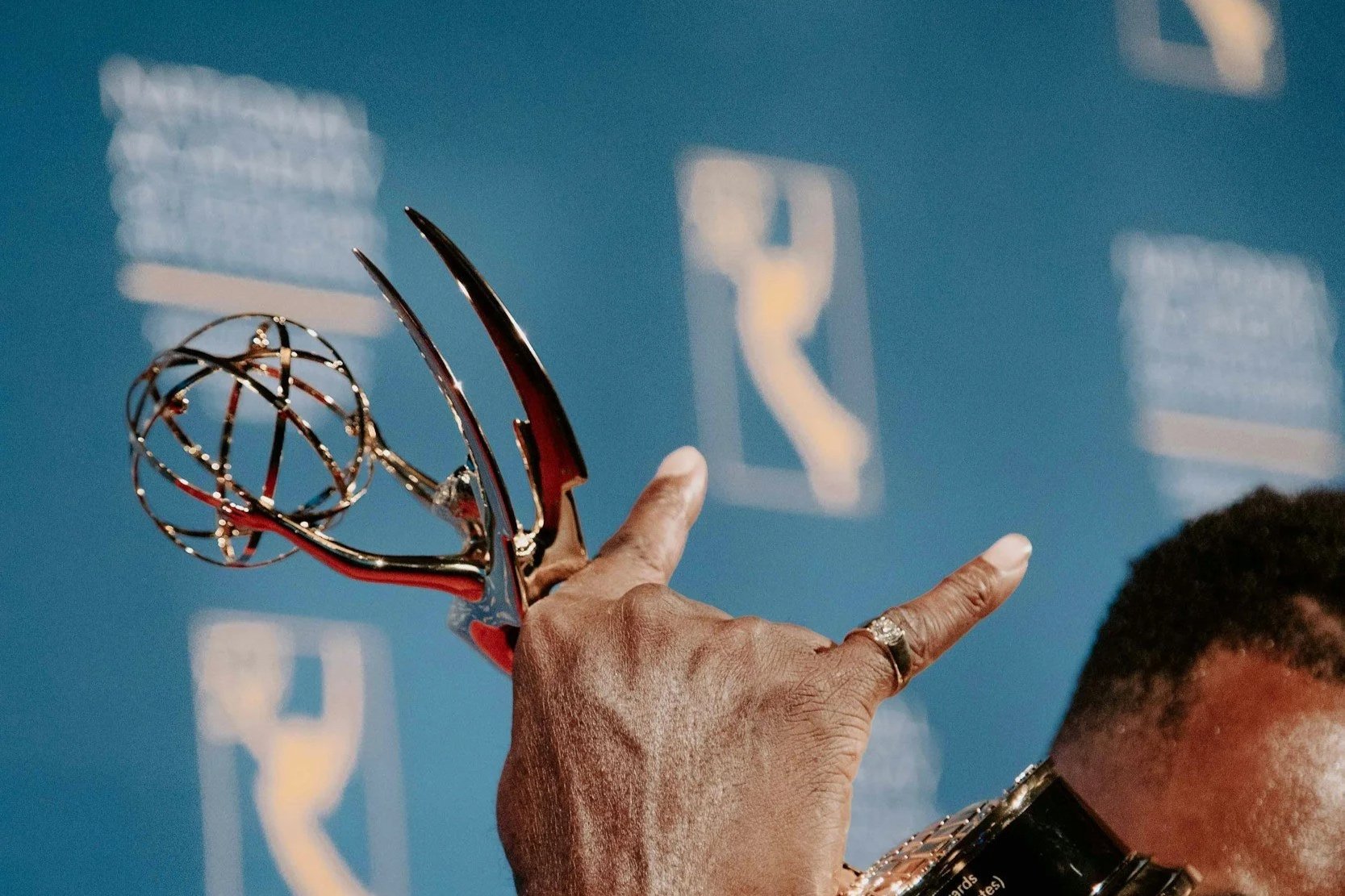
The 78th Primetime Emmy Awards arrived at a particularly interesting moment for television.
The way audiences watch television has changed dramatically, but the Emmy Awards remain one of the industry's most visible traditions. On September 14, 2026, television's biggest names gathered at the Peacock Theater in Los Angeles as Mariska Hargitay hosted the ceremony, with the awards recognizing the 2025–26 television season.
Rather than simply looking at who took home a trophy, this year's results offer a snapshot of where television is heading. The winners reflected changing genres, enduring formats, different approaches to storytelling, and an industry that continues to redefine what television actually means.
Widow's Bay Makes Emmy History
If there was one show that defined this year's Emmys, it was Apple's Widow's Bay.
The comedy won Outstanding Comedy Series and six awards during the televised ceremony. Combined with its Creative Arts Emmy wins, the series finished with 14 Emmys, setting a new record for the most awards won by a comedy in a single year. It surpassed the previous record of 13 held by The Studio.
The show's success is particularly notable because of its unusual premise and genre. Widow's Bay blends comedy and horror, demonstrating how increasingly flexible television categories have become. A series doesn't necessarily have to fit neatly into one conventional genre to find an audience or compete successfully for major awards.
That flexibility reflects how contemporary television has evolved. Shows can move between tones, genres, and storytelling styles within the same season, giving creators more room to experiment with what a series can be.
The Pitt Keeps Its Crown
The drama category produced a very different story. HBO Max's The Pitt won Outstanding Drama Series for the second consecutive year, while Noah Wyle won Lead Actor in a Drama Series for the second season of the medical drama.
According to the Television Academy, the series became the first show since Mad Men to win Outstanding Drama Series for each of its first two seasons.
Its continued success is also significant because the medical drama is hardly a new concept. Television has relied on the format for decades through series such as ER and Grey's Anatomy. The Pitt demonstrates that an established format can remain competitive when its execution and perspective feel contemporary.
Rather than requiring television to constantly invent an entirely new formula, the show's success suggests there is still room for familiar storytelling structures when they are approached in fresh ways.
Matthew Rhys Has a Night for the History Books
Matthew Rhys had one of the ceremony's most unusual individual achievements.
The actor won Lead Actor in a Comedy Series for Widow's Bay and Lead Actor in a Limited or Anthology Series or Movie for The Beast in Me. That made him the first performer to win two lead acting Emmys at the same ceremony.
The two victories also demonstrate how television performers can move between very different storytelling environments. Rhys was recognized in both a continuing comedy series and a limited production, showing how the modern television landscape provides opportunities across multiple formats.
His achievement represents a broader shift in how performers' careers can develop. Actors are no longer necessarily tied to one television format for an extended period, particularly as streaming has created more opportunities for limited series and shorter productions alongside traditional episodic television.
WANT MORE FILM AND ENTERTAINMENT BREAKDOWNS? READ MY LATEST ANALYSIS HERE
Jean Smart's Emmy Run Comes Full Circle
Jean Smart's victory for Hacks represented a different kind of achievement: consistency.
Smart won Lead Actress in a Comedy Series for the fifth consecutive season of the HBO Max series, making her the first woman to win the category for every season of a five-season comedy.
It was also her eighth acting Emmy, tying her with Allison Janney, Cloris Leachman, and Julia Louis-Dreyfus for the most acting Emmy wins.
Smart's achievement is particularly notable because Hacks has now completed its run. Her fifth victory closes out a performance that received Emmy recognition throughout the show's entire five-season lifespan.
Rhea Seehorn Finally Gets Her Emmy
For Rhea Seehorn, the story was much different. Seehorn won her first Emmy for Lead Actress in a Drama Series for Apple's Pluribus. Vince Gilligan also won for writing the series.
The victory represents the culmination of a long period of recognition for Seehorn's work. Her first Emmy win came after years of nominations and critical attention, making the award a significant career milestone in its own right.
It also gave Pluribus another notable result during a ceremony in which several established series dominated the major categories.
DTF St. Louis Wins the Limited Series Race
The limited-series category had its own standout. HBO's DTF St. Louis won Outstanding Limited or Anthology Series after entering the Emmys with 13 nominations.
Sally Field also won Lead Actress in a Limited or Anthology Series or Movie for Remarkably Bright Creatures.
Limited series occupy a distinctive place in the television industry because they allow creators to tell a complete story without committing to a long-running series. Writers and filmmakers can establish a beginning, middle, and end within a defined production, giving the format a structure that differs from traditional ongoing television.
The results in this category reinforce the continued significance of limited productions within awards-season television.

JOIN THE COMMUNITY
Stay ahead of entertainment and media trends. Subscribe for weekly insights on TV, streaming, social media, and storytelling—plus commentary and trending breakdowns delivered straight to your inbox.
Television's Center of Gravity Has Shifted
The platforms represented throughout the major categories also reveal how dramatically the television business has changed.
Apple TV+ had Widow's Bay and Pluribus. HBO Max had The Pitt, while HBO's DTF St. Louis took the limited-series prize. Netflix also had major representation among the nominees and winners.
The important change isn't simply that streaming services are winning awards. Streaming platforms have become an established part of the television industry's central awards conversation rather than a separate category of entertainment competing for recognition.
The Television Academy's nominations also illustrated that shift. The Pitt led all programs with 25 nominations, while Apple's Pluribus and programs from Netflix and HBO Max competed across major categories.
As a result, the word "television" increasingly refers to the medium itself rather than a particular network, channel, or programming schedule.
The Emmys Have an Audience Problem
Approximately 6.7 million viewers watched the 2026 Emmy telecast, nearly 10% fewer than the previous year, according to the Associated Press.
There is important context here. The ceremony aired on a Monday and faced competition from the first Monday Night Football game of the season between the Kansas City Chiefs and Denver Broncos.
Still, the numbers illustrate the difficulty of turning television's biggest awards into a universal viewing event.
Audiences can now watch an entire season at once, discover programs long after their premieres, or encounter actors and shows through social media before ever watching the original broadcast. Television consumption remains widespread, but the experience is increasingly individualized.
For an awards ceremony built around a shared cultural moment, that fragmentation presents a challenge. The Emmys can recognize the programs shaping television without necessarily bringing all of those programs' audiences together in front of the same screen.
The Ceremony Itself Had Some History
The awards weren't the only notable part of the night. Mariska Hargitay became the first woman to host the Emmys in 15 years, bringing her experience from one of television's longest-running franchises to the center of the ceremony.
The broadcast also recognized Michael J. Fox with the Bob Hope Humanitarian Award for his advocacy and philanthropic work, particularly through efforts surrounding Parkinson's disease research.
The ceremony looked back at television history as well, including celebrations marking the 30th anniversary of Buffy the Vampire Slayer and the 50th anniversary of Charlie's Angels.
Those elements gave the ceremony a broader sense of television's history, connecting current productions and performers with programs and figures that helped shape the medium.
So, What Do the 2026 Emmys Actually Tell Us?
Taken as a whole, the 2026 Emmy results show an industry with more room for variation than the traditional television model allowed. A comedy can incorporate horror. A familiar format like the medical drama can remain relevant. Actors can move between different forms of television, while limited series provide another way to tell complete stories. At the same time, streaming has become part of the industry's mainstream infrastructure rather than a disruptive newcomer.
The audience experience, however, has changed alongside the industry itself. Television is no longer something most viewers necessarily consume according to the same schedule, through the same outlet, or even during the same period of cultural attention.
That may be the most revealing part of this year's Emmys. The awards continue to operate as a snapshot of television, but the medium they are documenting is much larger and more fragmented than the one the ceremony was originally designed to celebrate.
The 2026 Emmy Awards may be remembered for Widow's Bay's record, Matthew Rhys's historic night, or Jean Smart's Hacks run. Together, those moments reflect a medium that continues to change without abandoning the storytelling traditions that made television what it is. Television isn't disappearing. It's expanding.
What This Year's Emmys Tell Us
What did you take away from the 2026 Emmys? Was there a win, performance, or moment that stood out to you? Whether you were surprised by the results, excited to see a favorite take home an award, or simply interested in what this year's ceremony says about where television is headed, share your thoughts below.
For more film and television analysis, reviews, and conversations about the stories shaping the screen, keep following Art Imitating Life. Subscribe to the newsletter so you don't miss new posts and get the latest from AIL delivered straight to your inbox.
DISCLAIMER FOR ART IMITATING LIFE
While we strive to provide accurate and helpful content on this site, Art Imitating Life makes no warranties or guarantees regarding the accuracy, completeness, or reliability of any information, advice, or opinions shared here. Use of the content on this website is at your own risk, and to the fullest extent permitted by law, Art Imitating Life is not liable for any losses, damages, or other consequences resulting from its use. By accessing and using this website, you acknowledge and accept this disclaimer and agree to its terms.
Our website may contain links to external websites for your convenience. These external sites are not controlled, sponsored, or endorsed by Art Imitating Life. We do not assume any responsibility for the content, availability, or practices of these third-party sites and disclaim liability for any loss or damage arising from your use of them.
